Indian Institute of Technology Bombay
Electrical
Engineering
An ecosystem pushing global limits in semiconductors, integrated circuits, communication & quantum technologies, control & power engineering
Announcements
Latest from the Department
PhD Admission Schedule 2026-27 (Spring)
Revised schedule of admission for the Ph.D. programme, Spring Semester 2026-27 — interviews are in-person on December 2 & 3, 2026 at the Girish Gaitonde Bldg., EE Dept.
Read announcementCLIP-Seminar — Neeraj Kumar Sharma
CLIP-Seminar talk by Prof. Neeraj Kumar Sharma: Wednesday, 28th October 2026 — EEG-301, GG Building, 5:00 PM.
Read announcementCLIP-Seminar — Parthe Pandit, CMInDS IITB
CLIP-Seminar talk by Prof. Parthe Pandit: Wednesday, 7th October 2026 — EEG-301, GG Building, 5:00 PM.
Read announcementCLIP-Seminar — Preethi Jyothi, CSE IITB
CLIP-Seminar talk by Prof. Preethi Jyothi: Wednesday, 30th September 2026 — EEG-301, GG Building, 5:00 PM.
Read announcementGallery
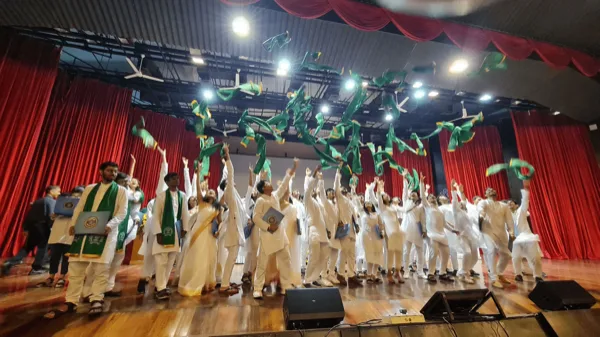
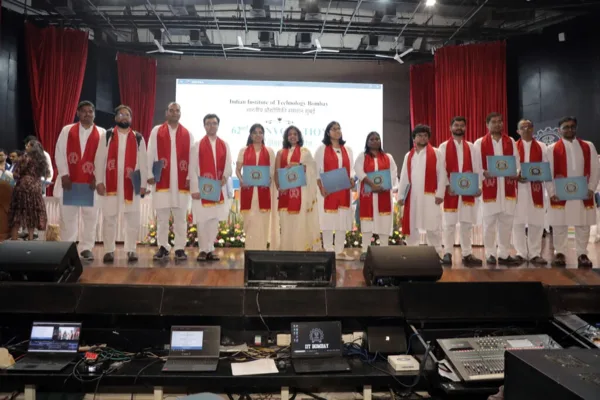
Convocation 2026
64th Degree Award Ceremony · 23 August 2026
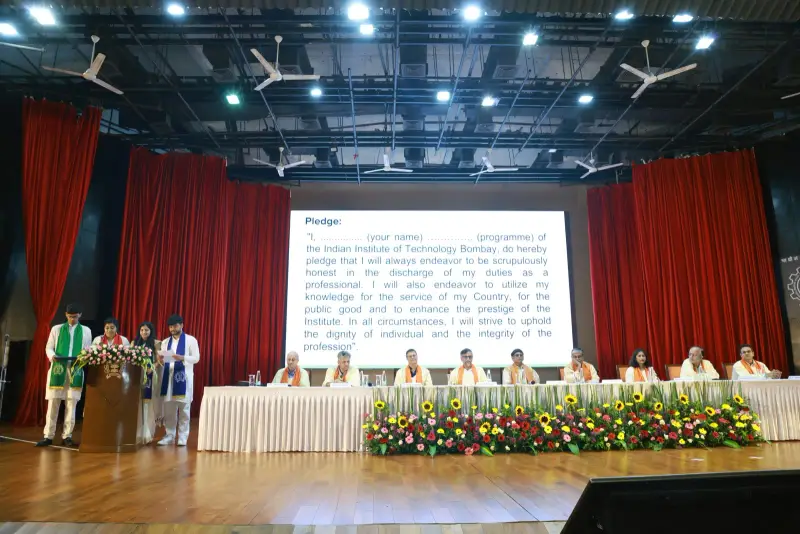
Driving Innovation & Leadership
Welcome to the Department of Electrical Engineering at IIT Bombay. Our department stands as a premier global destination for technical education and foundational research. Through collaborative ecosystems, our faculty and researchers drive architectural changes across computing, signal manipulation, and energy distribution infrastructures.
Read Full Message →Advancing Frontiers of Electrical Engineering
Our research groups span communications, signal processing, control systems, computing, microelectronics, power systems, and emerging interdisciplinary domains. Faculty, students, and researchers collaborate across laboratories to address both foundational scientific challenges and real-world engineering problems.
Explore Research Groups →Decades of Architectural Impact
Established during the formative years of the institute, the EE department has evolved from basic lab setups into one of the largest engineering clusters in the country. Our heritage is anchored in continuous transformation—from pioneering early semiconductor research to building modern scalable autonomous control nodes.
Explore Heritage Timeline →Research Labs
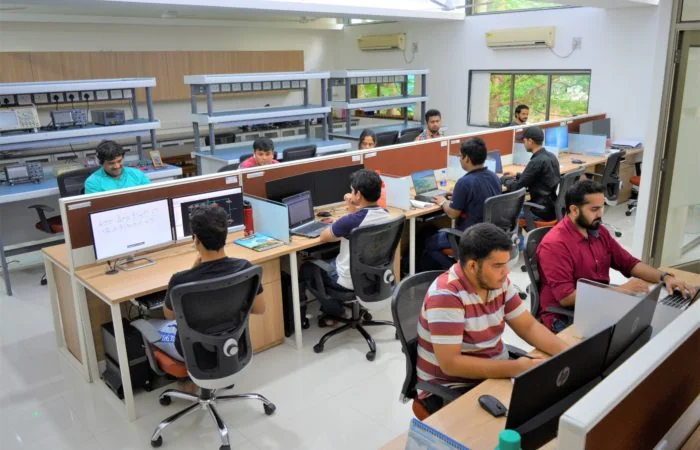
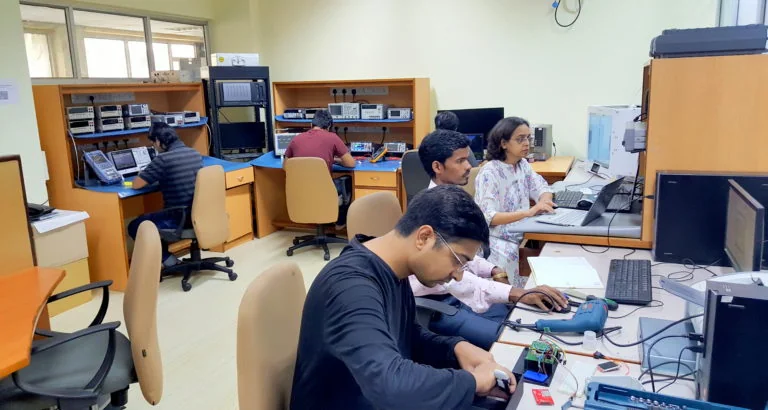
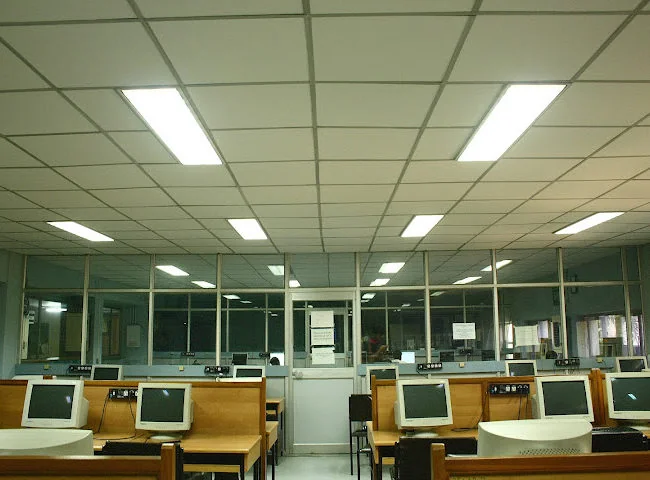
A dedicated environment for experimental work, supporting a wide range of specialized research in microelectronics, communications, and power systems.
Life in the Department
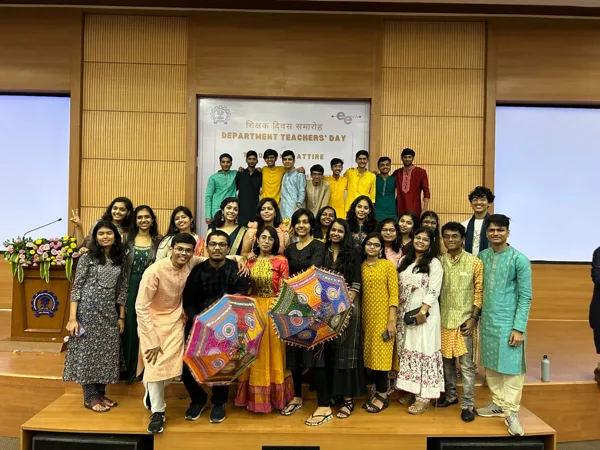
Life at IIT Bombay extends far beyond academic lecture halls. The Electrical Engineering department fosters a vibrant, student-led ecosystem driven by technical fests, cross-disciplinary code sprints, and global research conventions.
Explore Campus Life Modules →